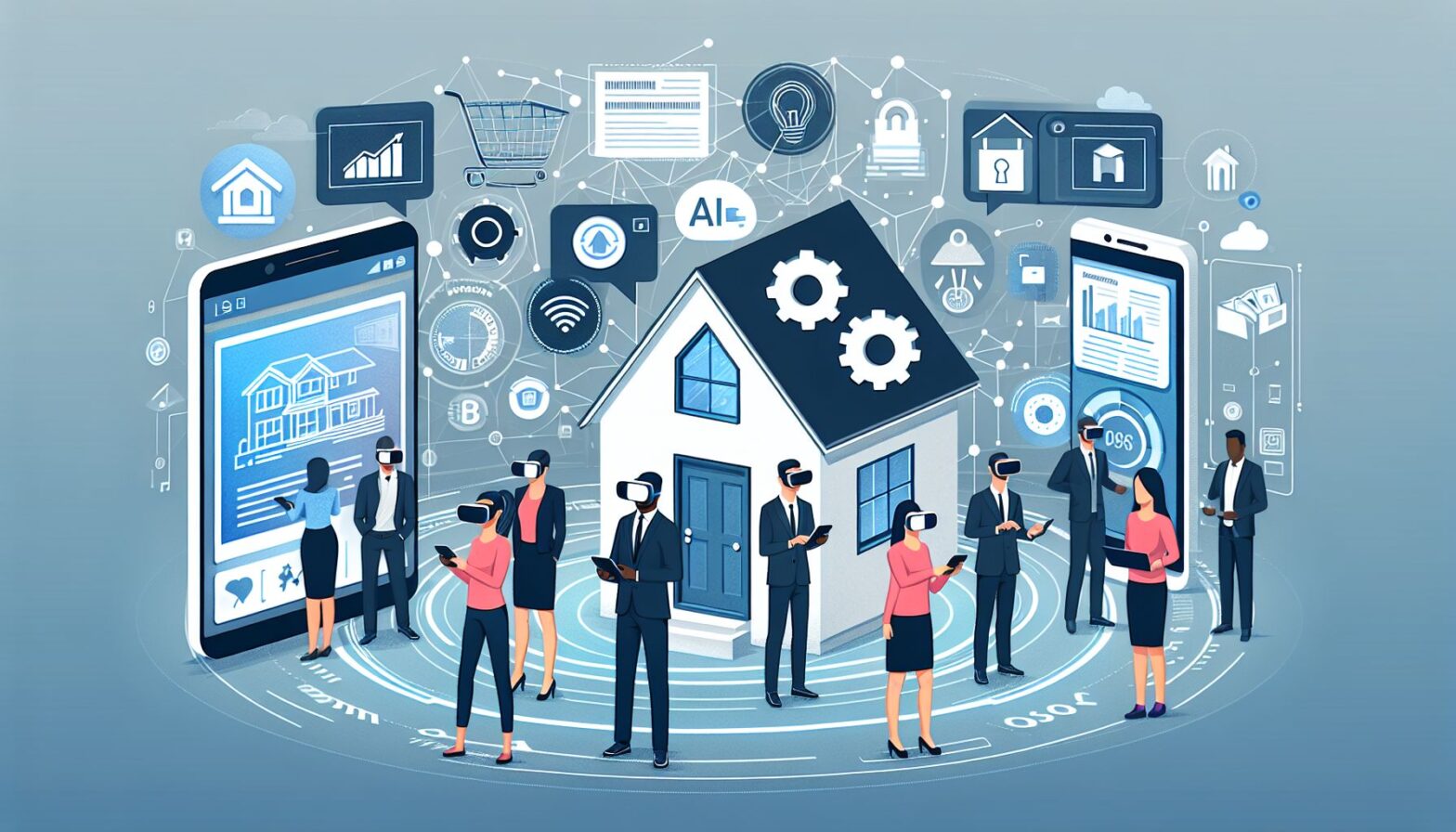
The hunt for a new home used to mean endless drives to view properties, cumbersome paperwork, and reliance on static listings. Nowadays, a revolution is underway, with technological innovations shaping your journey from the wishlist to the keys in entirely new ways. According to the National Association of Realtors, in 2021, 97% of homebuyers used the internet in their search for a new home, a clear indicator of technology’s pivotal role in real estate.
Virtual and Augmented Reality: Touring Homes from Your Couch
Imagine walking through a home, inspecting its features, and visualizing your life unfolding within its walls — all without leaving your current residence. Virtual reality (VR) and augmented reality (AR) are making this possible, offering immersive tours of properties far beyond simple photographs. These technologies allow you to navigate through homes, gaining a true sense of space and layout without the need for physical showings. Especially for those looking to move great distances or those constrained by time, VR and AR tools provide an invaluable method for shortlisting properties.
Big Data and Predictive Analytics: Smarter Decisions in Your Home Search
Navigating the real estate market requires accurate, up-to-date information to make informed decisions. Big data has entered the scene, employing vast sets of information to analyze trends, price movements, and even predict future values of homes. Gone are the days of solely relying on historical data or gut feelings. Predictive analytics makes it possible to target properties that not only meet your present needs but also hold potential for appreciation, offering a long-term perspective on your purchase.
The Blockchain Revolution: Secure and Transparent Transactions
The complexity and size of real estate transactions often lead to a sense of insecurity and opacity. Blockchain technology introduces a groundbreaking opportunity to streamline and secure the buying process. With the immutable record-keeping of blockchain, all aspects of the transaction, from initial offer letters to final closing documents, are transparent and tamper-proof. This development not only reduces the risk of fraud but also speeds up the entire transaction process, potentially saving months of waiting for paperwork to be processed.
Artificial Intelligence: Tailored Suggestions and Chatbots
With the amount of data available on properties, it’s important to sift through the noise to find what truly suits your dream home criteria. Artificial intelligence (AI) systems are being employed to analyze preferences, past behavior, and search patterns to provide tailored suggestions that accurately match your desires. Moreover, AI-powered chatbots can assist 24/7 with inquiries, schedule viewings, and even offer insights about neighborhoods and pricing, giving you a personal assistant throughout your house-hunting journey.
Drones: A Bird’s Eye View of Your Potential New Neighborhood
Never underestimate the value of a neighborhood’s look and feel when purchasing a home. Drones provide aerial footage that showcases the entire vicinity, including surrounding parks, infrastructure, traffic patterns, and other environmental factors you might consider before making an offer. Aerial views also offer a comprehensive look at the property itself, its roofing, the condition of its outdoor spaces, and its overall footprint — visual details that can be crucial in the pre-purchase phase.
Mobile Applications: Convenience at Your Fingertips
The real estate industry has not been left behind in the mobile app revolution. A wide range of applications now allow you to access listings, calculators, neighborhood comparisons, and real-time alerts about market shifts or new properties on the market. This on-the-go accessibility means you can act swiftly when a listing catches your eye, ensuring you’re always at the forefront of what’s available, all from the convenience of your smartphone.
Green Tech: Sustainable Homes for Eco-conscious Buyers
The rising trend for sustainable living is reflected in the technology used to evaluate properties. With smart home devices that manage energy consumption and resources, a new generation of eco-conscious buyers can find homes that align with their values. Green building certifications and sustainability scores are becoming a critical part of property listings, providing clarity on how homes measure up in terms of environmental impact.
The Internet of Things: The Connected Home Experience
Smart home technology goes beyond saving the planet. The Internet of Things (IoT) is equipping homes with connected devices that improve the quality of life, offer enhanced home security, and increase property value. Features like smart thermostats, connected appliances, and automated lighting systems are now part of the home viewing experience, showcasing cutting-edge convenience that could tip the scales in favor of modern, tech-equipped homes.
The Takeaway:
The real estate industry is undergoing a seismic shift, propelled by the innovation of technology that is changing every angle of home buying. From the powerful visualization capabilities provided by VR and AR, the insightful analysis offered by big data and predictive analytics, to the streamlined processes afforded by blockchain technology, and the personal touches unveiled by AI, the approach to finding a home has evolved into a sophisticated, tech-driven experience.
Moreover, drone technology, mobile applications, advancements in green tech, and the IoT further enrich the property search, offering comprehensive insights and convenience previously unthinkable. While this digital transformation is complex, it ultimately places a vast array of tools at your fingertips, enabling smarter, faster, and more personalized decisions in your pursuit of a new home. Embrace these tools, and you’ll find they’re more than mere conveniences — they’re powerful allies helping you navigate the manifold considerations of today’s real estate landscape.